The History of Lyres
There are many shapes and forms of Lyre, but they all have this basic shape. Many of the shapes that we have are from various artistic pieces, generally paintings, sculptures or emossing on clay such as vases. While we have many parts of the lyres from medieval digs and other antique gatherings, we do not have many actual surviving lyres. Most of the parts that we have found, generally the hard bridge or tuning pegs, have had the shape of the lyre inferred.
There are 2.5 extant lyres found in all of Europe.
The Sutton Hoo and Dzhetyasar Lyre
The Sutton Hoo Lyre parts were only a few remaining pieces in the Sutton Hoo dig, a cemetary dating around the 6th or 7th century, near Woodbridge, Suffolk, England. This is attributed to the Angloa-Saxon kingdom of East Anglia.
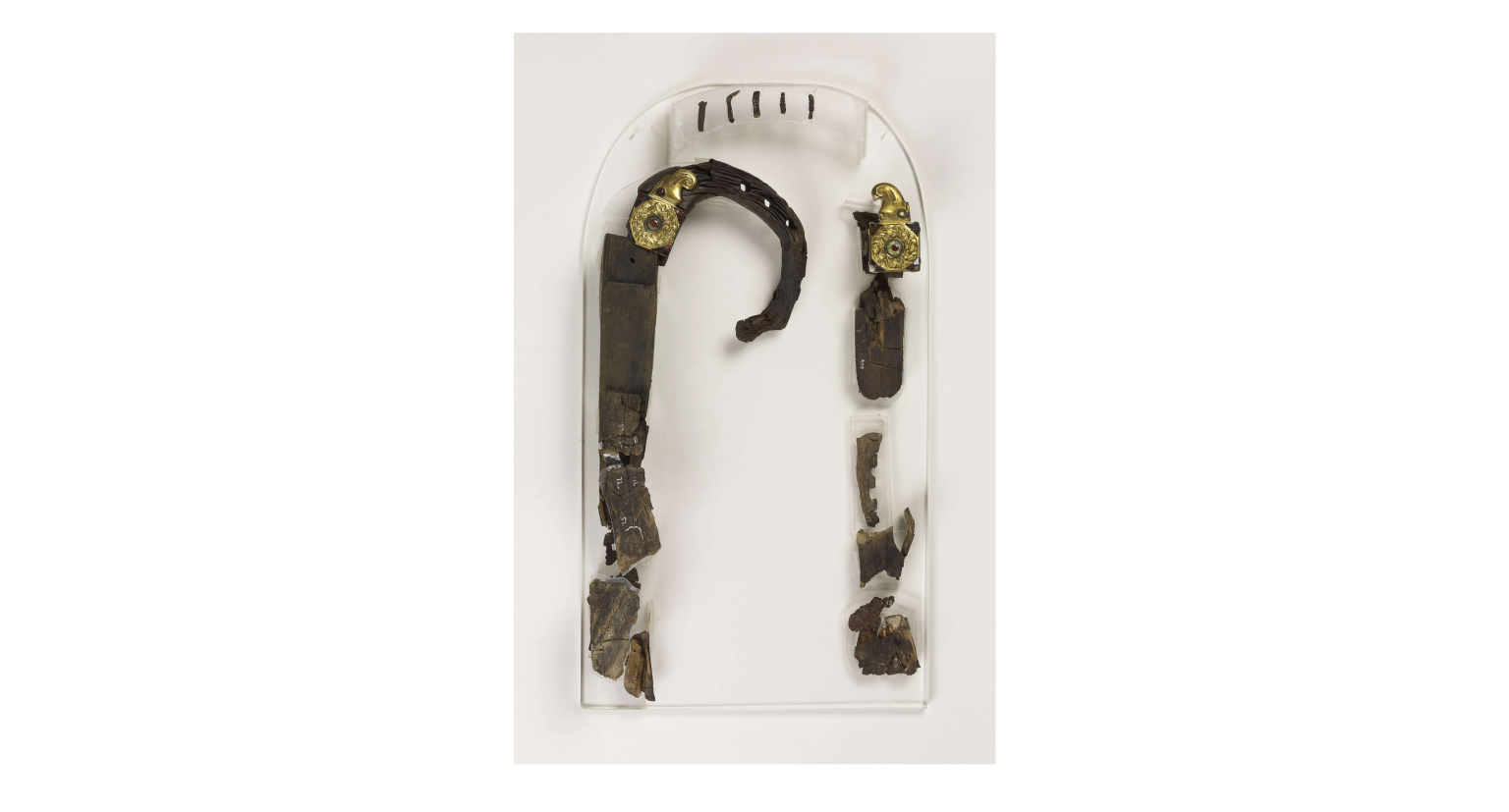
In 2018, Dr Azilkhan Tazhekeev re-examined the materials from a south-west Katakhstan dig, 1973, and concluded that this was a musical instrument. These have been dated to the the 4th Century CE. Dr Tazhekeev theorised that these were an ancestor to the traditional Katakh instrument Kossaz, a double necked lute.
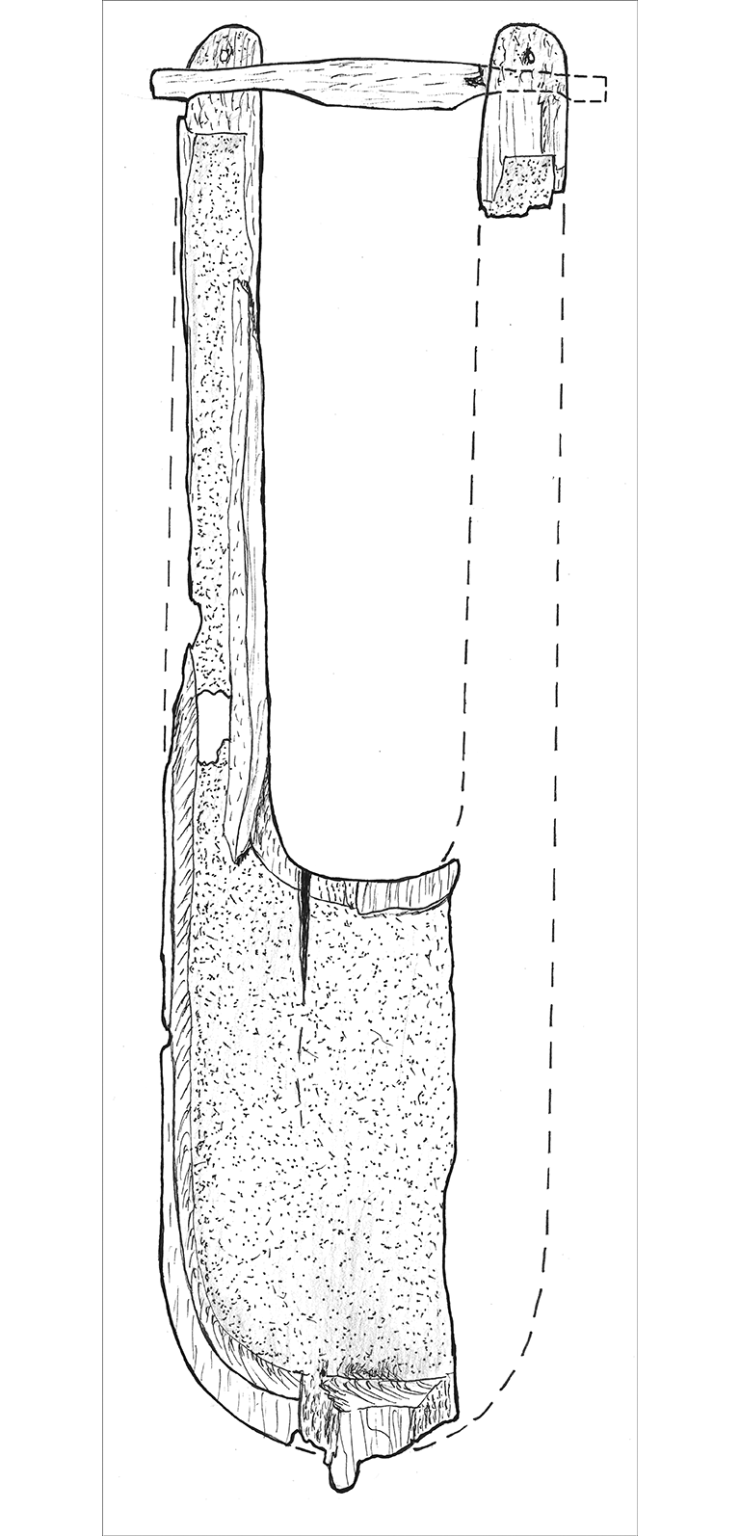
These are similar to some extent to the Sutton Hoo bits of musical instrument, and now considered to both be forms of Lyre. Half of the Lyre was remaining in a dig. Below is a sketch of that Lyre. The dotted lines indicate speculation on missing parts.
Length = 655 mm.
For more information [CambridgeUniversity Press Link].
The Kravik Lyre
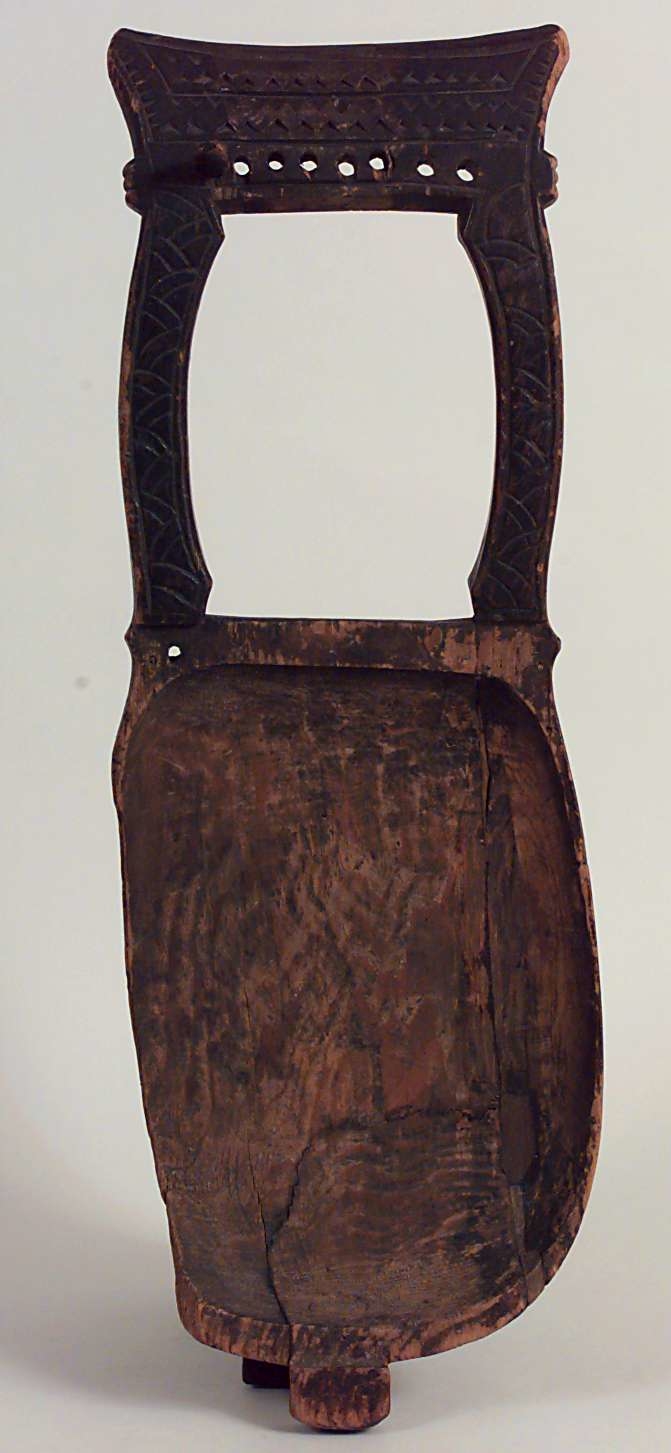
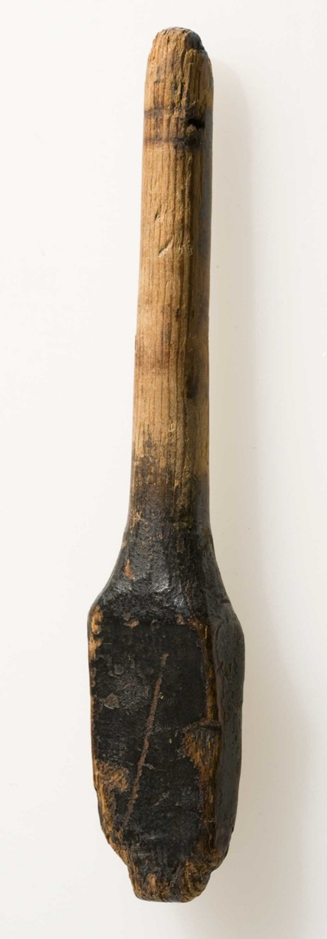
The Kravik Lyre was found on a farm in Kravik, Nore, Numedal around the middle of the 19th century, and was received by University Antiquties Collection in 1864. Carbon dating has shown that the Lyre likely was made after 1475, as the wood is is contructed from was felled between 1475 and 1633.
The totoal Length is 710 mm, the widght is 267 mm.
Additional information can be found at [https://digitaltmuseum.no/011023128867/lyre]
The Trossingen Lyre
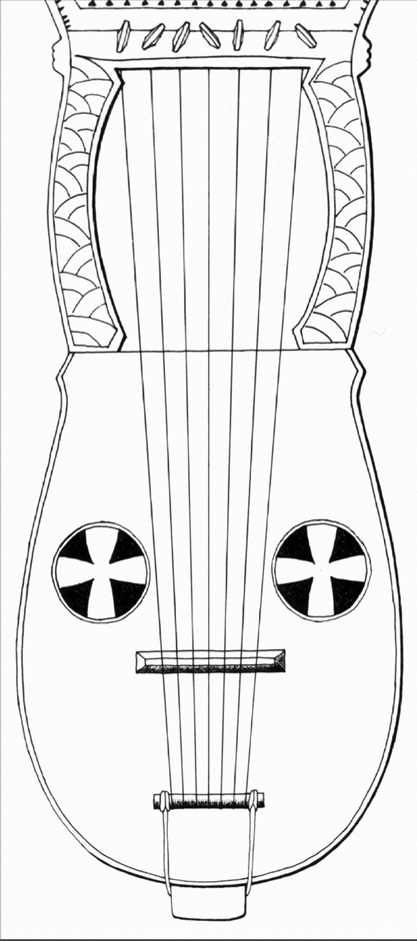
The Trossingen Lyre is a a 6 stringed lyre from the 6th Century. It is almost completely preserved. It was found in an Alamannic Noble’s grave, Trossingen in the Tuttlingen district. It is on permanent display at the Archaeological State Museum in Konstanz.
Extant Lyre: Photos, Description and Analysis
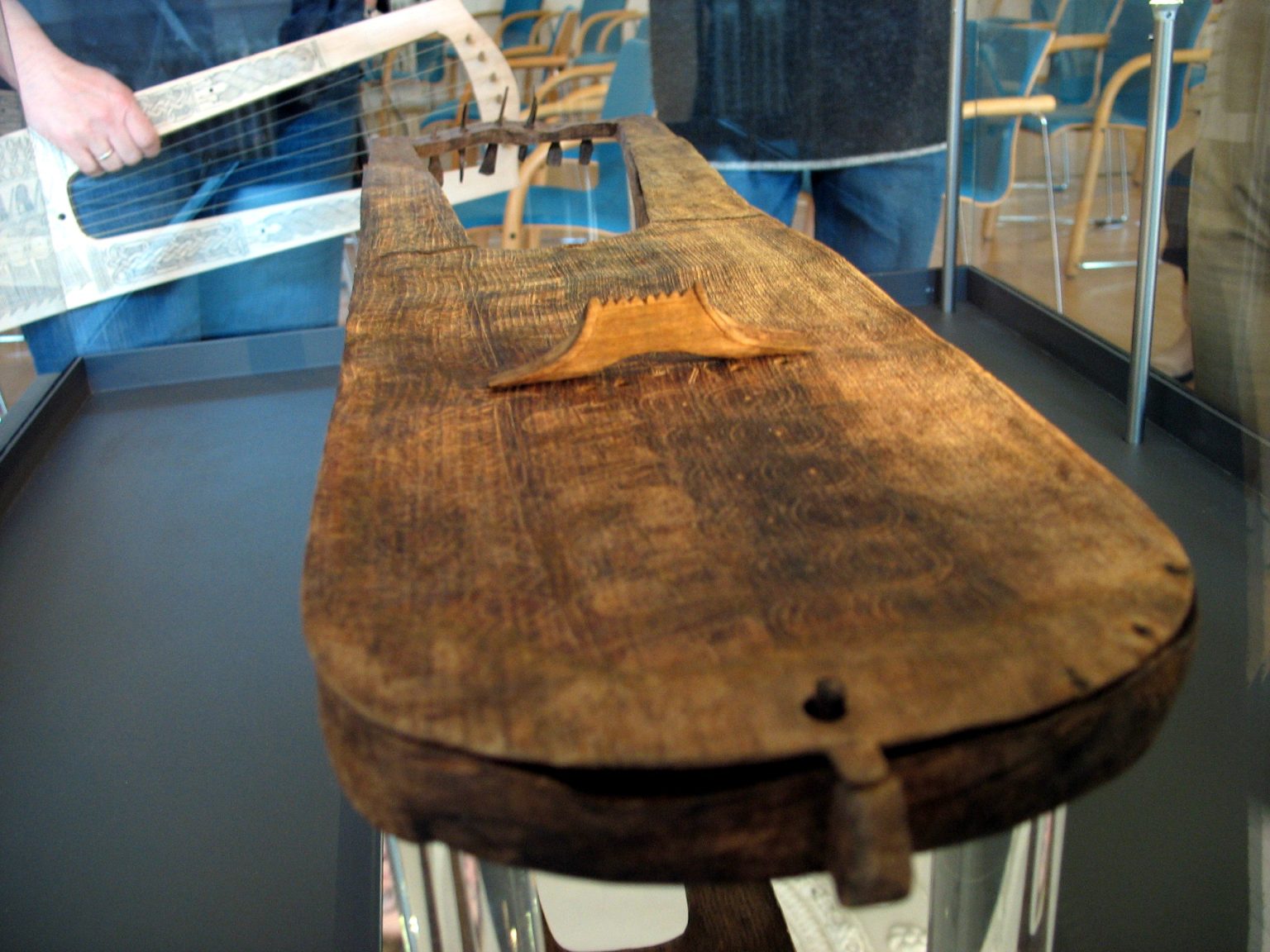
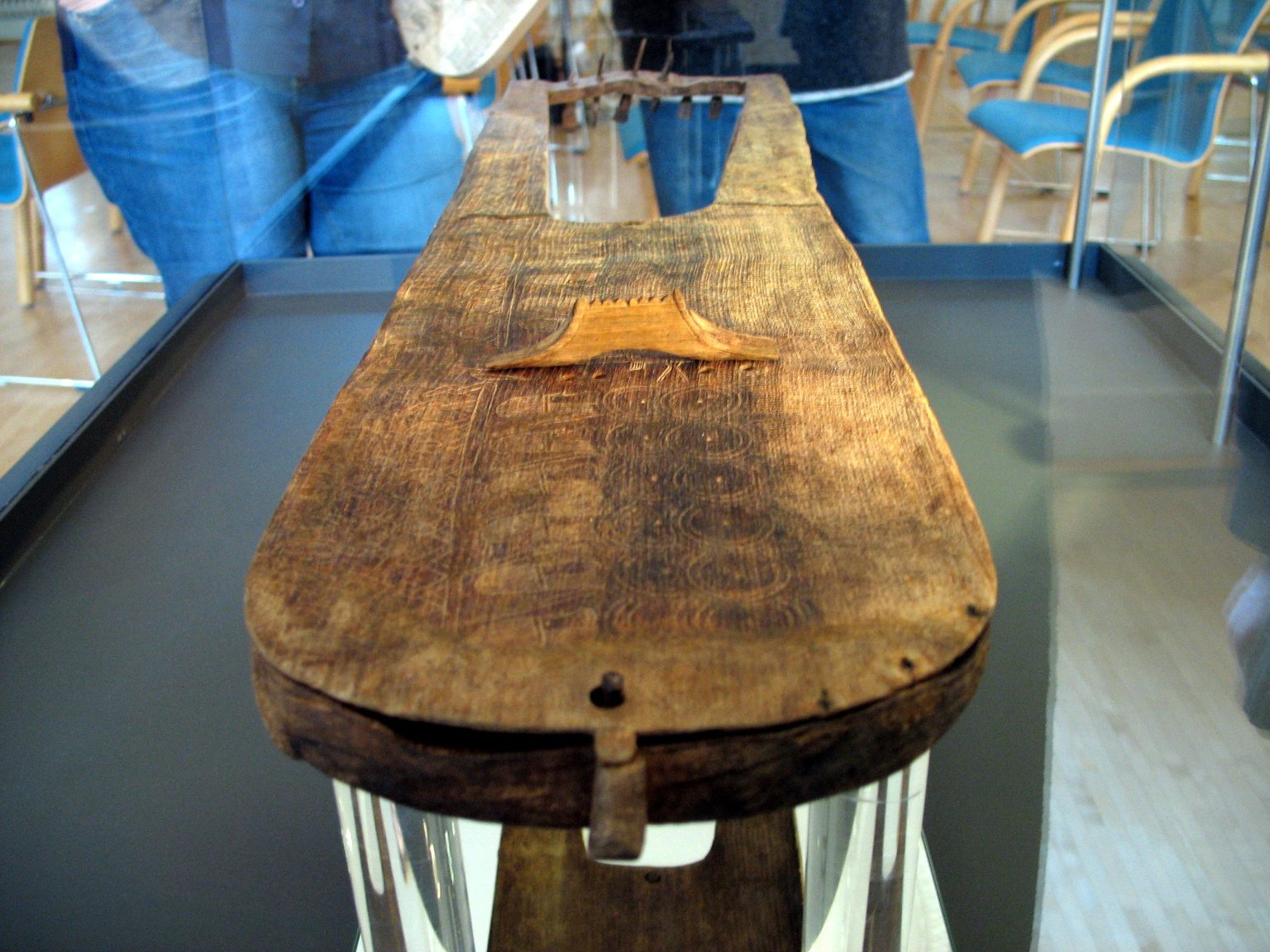
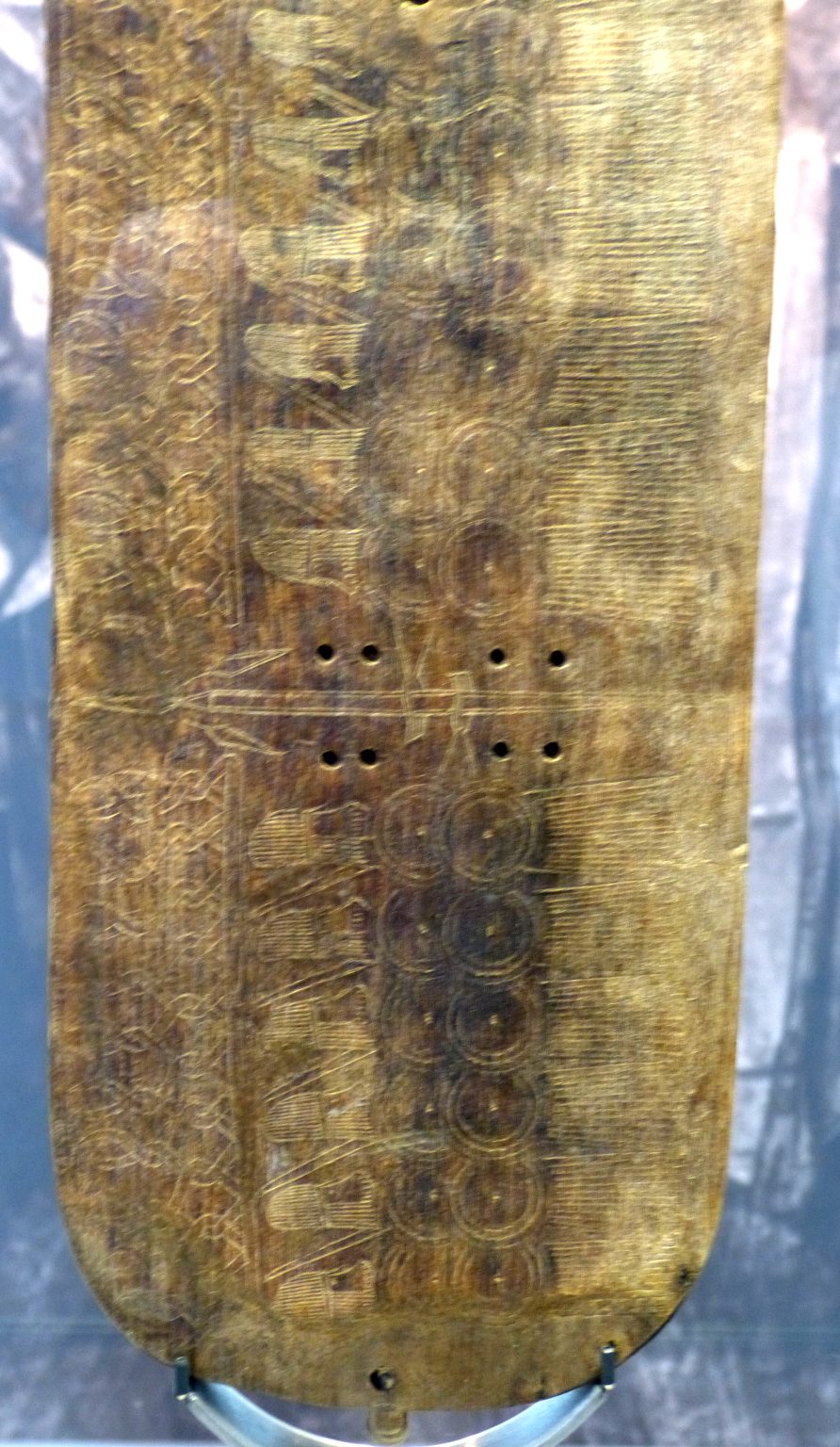
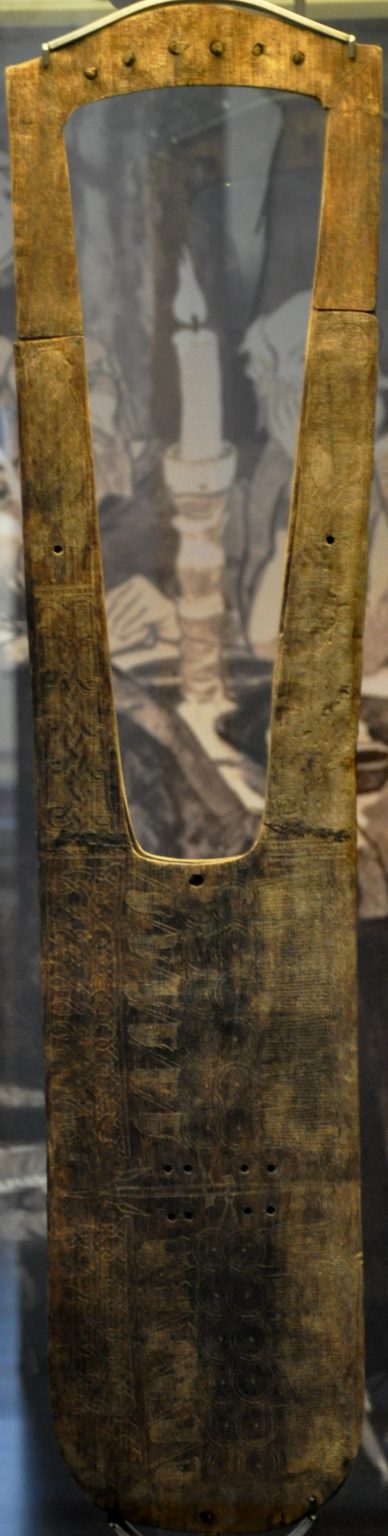
There is a design scratched into the surface of the upper laminated layer that is armoured people holding shields and spears or swords. Half the warriors face in the opposite direction, both towards the bridge. Above the warriors a knot like design is split by the artwork that holds the bridge between the 8 central sound holes. Two more sound holes are at the top of the sound box on the arms, 1 at the meeting of the two arms, and one at the bottomof the sound box at the base of the lyre. On the back side (not shown), a disign of braided lines forms 44 snakes.
The Trossinger Lyre is mostly made of maple. The sound board has a laminated layer of maple ranging between 1 to 6 mm in thickness, afixed by glue and give small iron nails. The nails were likely added later as part of a repair. The dimensions are 803 mm in total length, the widest width of the sound box is 195mm, and the widest part of the yoke is 195 mm.
Six tuning pegs for tensioning the strings sit on the head. Four are made of ash and two from hazel. The bridge is made of will wood. There is leather residue on th lower endso f teh yoke arms, indicating a kind of strap to retain it to the musician. The strings did not survive, but are thought to have been made of animal gut.